
'We should hit Pakistan, continue to prepare for surgical strikes, continue to punish Pakistani posts in the proximity of the LoC and we should start adopting counter terrorist measures.' 'That should be India's action without escalating it to a full-fledged war.'

Donald Trump and General H R McMaster: It is almost like the Chinese monarch Helü with Sun Tzu at his side.

Aseem Chhabra lists the top 10 films at the recent Toronto International Film Festival.

Pavan K Varma, diplomat, writer and politician, embarks on a quest about Hinduism's great thinker's stay in Varanasi.

Three Indian Air Force officers held as Prisoners of War in a jail in Rawalipindi made a heroic escape. They reached as far as the Pak-Afghan border in Pakistan's Wild West -- within sniffing distance of freedom -- only to realise that they had finally met their match. Or so it seemed. The three escapees were never feted for their audacious attempt 41 years and truly deserve official recognition. Why not honour them at least now, says MP Anil Kumar.

Princess Jahanara, Mughal emperor Shah Jahan's daughter, was a paragon of virtues: well-educated, well-versed in statecraft, even-tempered, beautiful. Although she was on the side of Dara Shikoh in the succession battle, it says much for her stature that after Shah Jahan's death, she was made the chief lady of the court by Aurangzeb and accorded every respect.
Can you find a world leader who has met generations of Indian politicians, most US Presidents, European head of States, several Popes, celebrated cricketers, Hollywood and Bollywood stars, some of the greatest scientists and many ordinary people, including what he calls, 'Chinese brothers and sisters?'

Barack Obama will still be in the Oval Office till the morning of January 20, but gosh, we are already beginning to miss him.
'The response to terror is not always reciprocal terror, nor is launching a conventional response the best response.' 'The best response is to make the sponsor pay a price he cannot afford,' says former RA&W chief Vikram Sood.

Princess Shivranjani of Jodhpur is breathing new life into dead forts and quietly changing the house of Marwar.

It's perverse to rationalise 'controlled' killings or torture -- without going down a slippery moral slope. Once the state stoops to torture, it's liable to sink into tyranny, says Praful Bidwai.

An excerpt from Conde Nast India's Make In India magazine.

Secretary general of CBCI Bishop Theodore Mascarenhas on what he doesn't like about the new education policy.

Hein Kiessling has the kind of access in Pakistan that journalists (and spies) would die for, says Kanika Datta.

Right now, in Modi's Cabinet and in the BJP, there is no challenge whatsoever to Modi's leadership but even those leaders who have some potential, who the Rashtriya Swayamsevak Sangh can think of backing in an unforeseen circumstance, are fast turning into damaged goods, reports Sheela Bhatt/Rediff.com.

'India was in no position to wage another war in 1965, having suffered a morale-shattering defeat in 1962. The three services were in the middle of a modernisation and expansion phase and therefore not fully trained or battle-ready.'

Check out the gold medallists on Day 11 of the 2016 Olympic Games in Rio de Janeiro on Tuesday.

'Ne Win kept good relations with the Nehru family even though he did nothing to do business with India. When Indira Gandhi was assassinated, Ne Win took off to an undisclosed destination, leading to rumours that he had gone to India. But we had no knowledge of his visit and days later, we were told that he was so struck with grief that he went into meditation on an island.' Ambassador T P Sreenivasan delves into Rajiv Bhatia's new book on mysterious Myanmar.
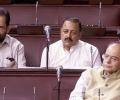
Most of the opposition parties blamed Rashtriya Swayamsevak Sangh-affiliates for the cow vigilantism.

The hit Harry Potter series actress's speech touched on many issues, including the confusion over the word feminism.

'It is important to note that American officials were trying their best to use the Taliban for their oil games till December 1997 when Mullah Ghous was invited to America. State Department officials did not show any interest in capturing or killing Osama bin Laden even at that time.'

'A drought is like a fire. It licks everything in its wake - crop, trees, animals, humans...' The plains of the Ganga in Bihar have a raw, unmatched, beauty, but also bear the anguish of its farmers.

'She is tough. She can be stern. She can be unpleasant. Rajiv was none of these things.' 'The Congress cannot survive without the Gandhi family. If Sonia were to quit, their Lok Sabha seats would drop from 44 to four.' K Natwar Singh shares his bitterness about the Nehru family with Rashme Sehgal.

But their reign has been tumultuous as the company has seen compelling battles for ownership.

'We eat first, they later; we sit on chairs and they on the floor; we call them by their names and they address us by titles,' writes Tripti Lahiri, author of Maid in India.

They broke free yet failed to evade the clutches of law.

The year 2014 is coming to an end. It was the year of conflict, the year of strife. Year 2014 will be remembered for several reasons -- the rise and threat of the Islamic State, the downing of two Malayasia Airlines aircraft and the sudden and effective way of using hastags on social media to generate a buzz about the event. After all, who can forget #theicebucket challenge and the phenomenon it grew into. Read on as we bring you an overview of international news and events of 2014.

The American Association of Physicians of Indian Origin will attend the Pravasi Bharatiya Divas in Delhi with an agenda to develop a plan to bring together AAPI, NGOs and the government to provide access to affordable and quality health care. Aziz Haniffa reports

It is always wonderful to discover a gem of film at an international film festival. It is even more exciting when that film is from India.

'He deserved to be field marshal because he carried the air force and navy with him in '71. Remember we were fighting on two fronts -- east and west. He stood out.'

Forty years after the declaration of Emergency by Indira Gandhi, the Sunanda K Datta-Ray recalls life when civil rights were suspended and press censorship was in force
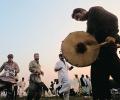
The Kabuliwalas of Kolkata, traditional moneylenders, have seen their numbers shrink.

Protesting against enforced disappearances in Balochistan, Abdul Qadeer Baloch, 72, has led a small group that has covered more than 2,000 kilometres on foot, breaking the 84-year-old record set by Mahatma Gandhi during his Dandi march. Hamid Mir reports from Islamabad.

Mahesh Rangarajan, director of the historic Nehru Memorial Museum and Library in New Delhi, tells Sheela Bhatt how the first prime minister will always remain relevant, and the efforts being made to keep his legacy alive.

Incoming US President Donald Trump has assembled a core team that is -- not surprisingly -- overwhelmingly white and male.

Why does this Kerala district see so many political murders and revenge killings?

Prakash Bhandari chalks the journey of Lalit Modi from his troubled adolescent days to his mid-life crisis, from his grand success at the India Premier League to his dramatic exit from it
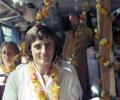
Often when I meet a new Indian friend, who is not aware of my background, he exclaims: "So many years in India! but why, why? I can't understand! My dream is to go to the States or Europe and you are living in 'this' country!" Claude Arpi, who was born a Frenchman, looks back on his 40 years in India.

'The darkest days of Indian democracy were (during) the Emergency when basic democratic rights were suspended. For a time it seemed as though India would move along the East Asian model -- everybody works hard, nobody asks questions, certainly not of the government.' 'There are people who say we are headed that way, but I am not persuaded by the evidence,' says Mahesh Rangarajan who recently resigned as director of the Nehru Memorial Museum and Library in New Delhi.

'Give time to the 2013 Act to work. I not only think that the 2013 law is workable, I believe that the 2013 law is a compromise, a balanced middle path and protects the interests of land owners and livelihood losers.'
